

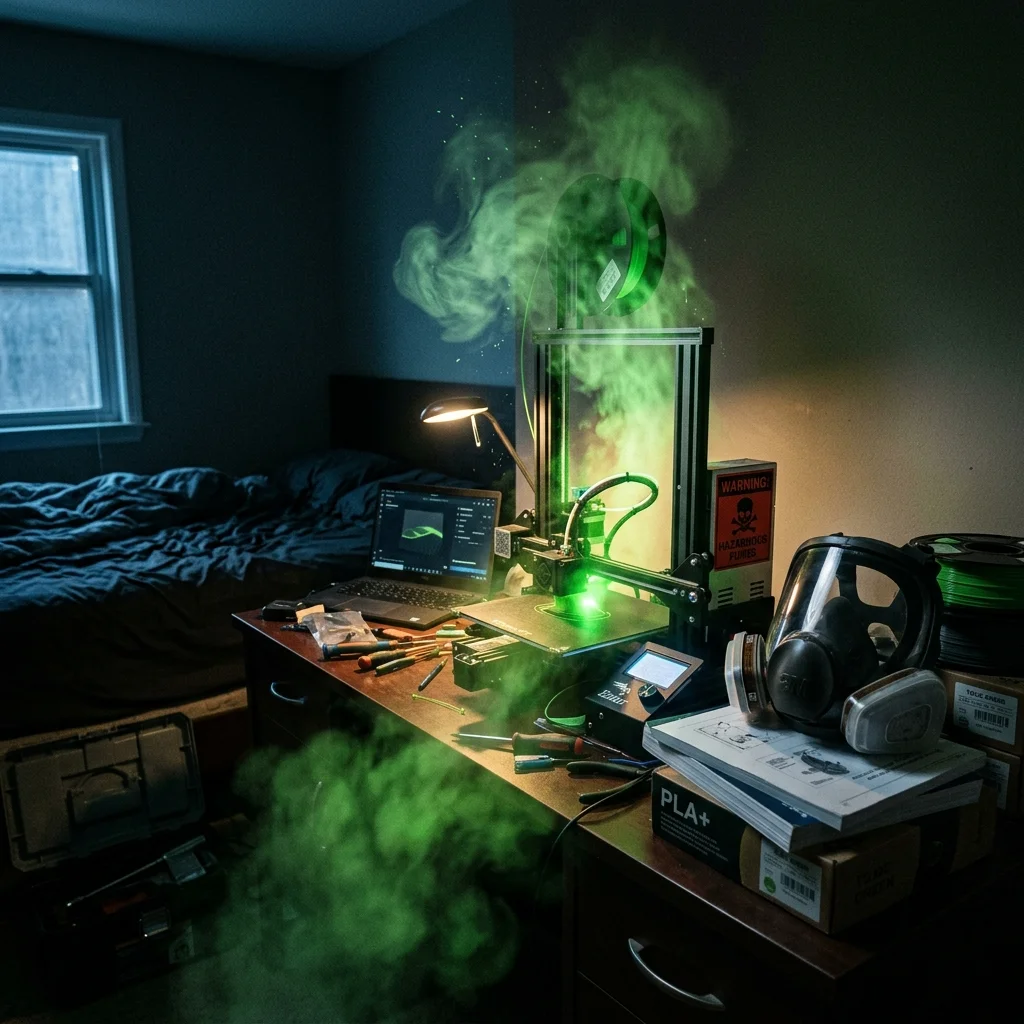

Are you breathing in toxic plastic fumes while your high-speed printer runs at 500 mm/s? With the widespread adoption of high-speed CoreXY 3D printing operating at speeds of 300 to 500 mm/s, workshop air quality has taken center stage. New studies published by NIST and the EPA in mid-2026 have revealed concerning data regarding the emission rates of unfiltered home printing setups.
High-Speed Printing = 5x Emission Rates
Data from 2026 establishes a direct correlation between rapid extrusion rates and chemical release:
- Thermal Stress: To melt filament fast enough at high volumetric speeds, hotends must run at elevated temperatures. This intensifies the thermal degradation of the polymer.
- Ultrafine Particles (UFPs): Nanoparticle emissions spike up to five times compared to legacy slow printing. These sub-100nm particles bypass the lungs’ defenses, entering the bloodstream.
- Volatile Organic Compounds (VOCs): Styrene (from ABS/ASA) and caprolactam (from Nylon) levels quickly exceed safe exposure limits in unventilated rooms.
Emissions risk and ventilation analyzer
Work out the pollution levels in the room and see the safety measures you need.
Air quality assessment:
Resin Printing: New 2026 OSHA Restrictions
Handling liquid photopolymers has drawn strict regulatory oversight in 2026:
- Makerspace Ventilation Mandates: New OSHA safety standards ban resin printing in educational settings unless active local fume hoods are installed.
- Acrylate Sensitization: Researchers warn of permanent, cumulative respiratory allergies developed from long-term exposure to volatile photoinitiators.
- Chemical Disposal: The washing phase with isopropyl alcohol (IPA) produces hazardous chemical waste requiring professional disposal to protect water ecosystems.
Modern 2026 Air Filtration Standards
Simple ventilation is no longer considered sufficient. Safety protocols demand:
- Active Recirculation (Scrubbing): Using internal air scrubbers equipped with acid-treated activated carbon (optimized for VOC absorption) and HEPA H13 filters.
- Negative Pressure Ducting: Venting sealed enclosures directly outside via dedicated exhaust ducts and blower fans.
- Zone Separation: Ensuring printing machinery operates in isolated, unoccupied rooms.
Invisible Hazards: Latest 2026 Findings On Ufp And Voc Emissions Calculator
Interactive optimization calculator.
The full picture
This article is one page from The Big Book of 3D Printing: 704 illustrated pages covering every technology, material and fix in one reference.
Read it on Kindle →Engineer, author of The Big Book of 3D Printing and additive manufacturing expert