

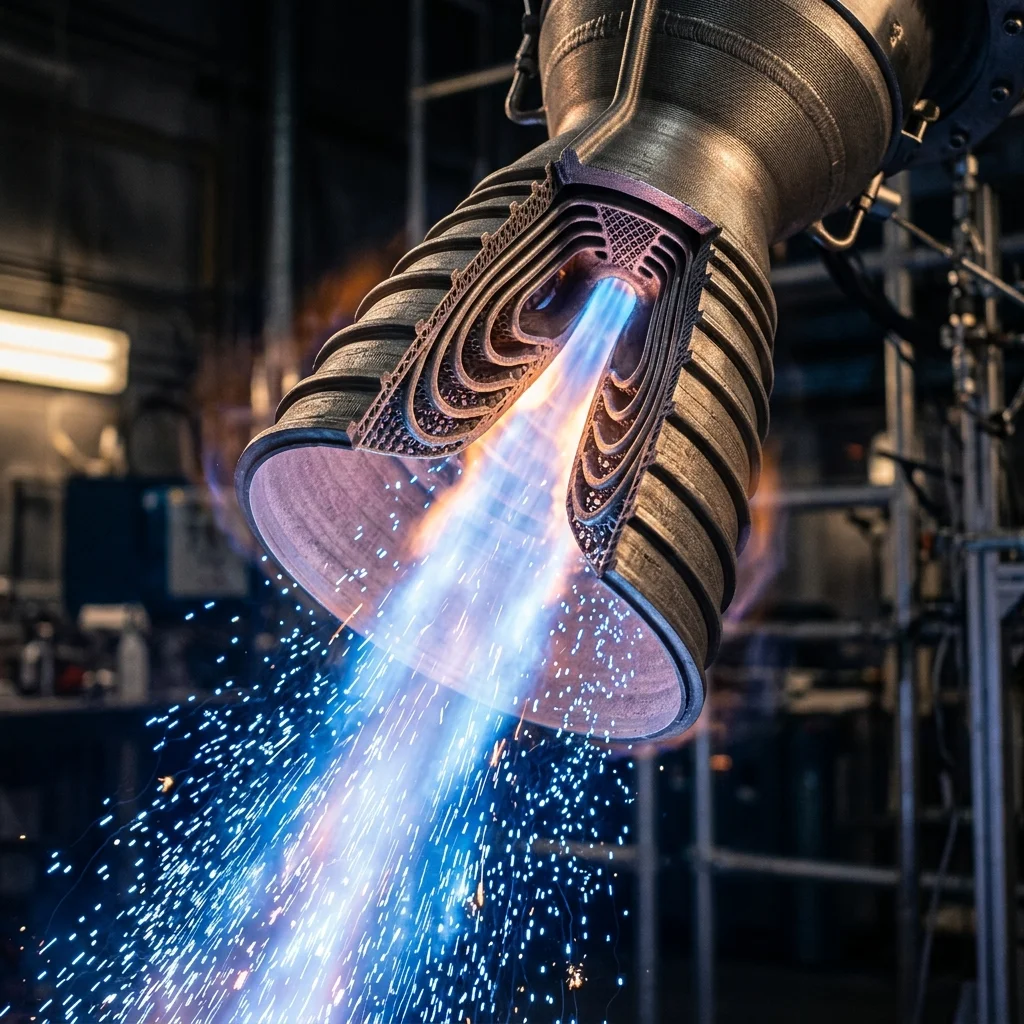
In 2025–2026, 3D printed rocket nozzles represent AM’s most extreme application. SpaceX, Relativity Space, and Rocket Lab use PBF-LB for critical propulsion components.
AM vs Conventional
| Factor | Conventional | AM (SLM) |
|---|---|---|
| Part Count | 100–1000 | 1–5 |
| Lead Time | 6–18 months | 2–6 weeks |
| Weight | Baseline | -20–40% |
| Cooling Channels | Simple | Conformal (optimal) |
Interactive Filament Selector
Answer 3 quick questions and find the optimal material for your project.
1. What are the mechanical requirements for the part?
2. What temperature will the part operate at?
3. Are there any specific environmental requirements?
Our recommendation:
PLA filament
Ideal for easy printing, model visualization and decorative parts.
Examples
SpaceX SuperDraco (Inconel 718), Relativity Space Terran 1 (85% 3D printed), Rocket Lab Rutherford, NASA RS-25 (GRCop-84).
FAQ
Interactive Analyzer for Lightweight Rocket Nozzles Via Slm: Aerospace Am Applications
Select a profile to view detailed analysis.
The full picture
This article is one page from The Big Book of 3D Printing: 704 illustrated pages covering every technology, material and fix in one reference.
Read it on Kindle →Engineer, author of The Big Book of 3D Printing and additive manufacturing expert