

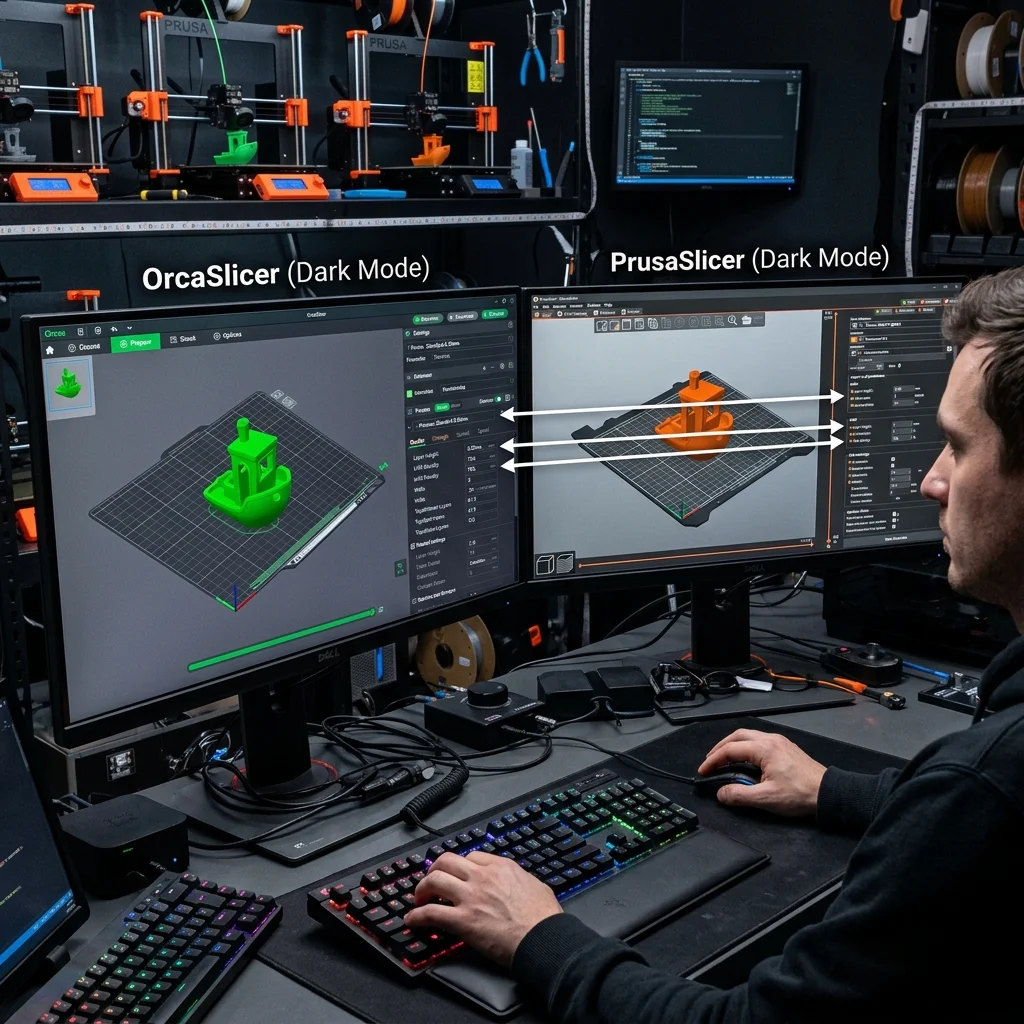
In 2025–2026, slicer profile translation between platforms (PrusaSlicer ↔ OrcaSlicer ↔ Cura ↔ Bambu Studio) remains a significant pain point. Each slicer uses its own nomenclature for identical physical parameters, creating incompatible profile ecosystems.
The Problem: Island Effect
| Parameter | PrusaSlicer | Cura | Bambu Studio |
|---|---|---|---|
| Print Speed | perimeter_speed |
speed_print |
outer_wall_speed |
| Retraction | retract_length |
retraction_amount |
retraction_length |
| Temperature | first_layer_temperature |
material_print_temperature_layer_0 |
nozzle_temperature_initial_layer |
Interactive Filament Selector
Answer 3 quick questions and find the optimal material for your project.
1. What are the mechanical requirements for the part?
2. What temperature will the part operate at?
3. Are there any specific environmental requirements?
Our recommendation:
PLA filament
Ideal for easy printing, model visualization and decorative parts.
Translation Methods
- Parameter Mapping (Rule-Based): Manual correspondence tables. Simple but fragile.
- Semantic Matching (NLP-Based): NLP analyzes parameter names for automatic linking. More flexible.
- Functional Equivalence Testing: Optimize target slicer parameters for same output characteristics.
Pros and Cons
Pros:
- Freedom: Users not locked into one slicer ecosystem.
- Sharing: Profiles shareable across different slicers.
Cons:
- Imperfect Mapping: Some parameters lack exact equivalents.
- Version Instability: New versions may change parameters.
FAQ
Slicer Profile Translation Methods: Prusaslicer ↔ Cura ↔ Bambu Studio Exposure Calculator
Calculate optimal resin print time.
The full picture
This article is one page from The Big Book of 3D Printing: 704 illustrated pages covering every technology, material and fix in one reference.
Read it on Kindle →Engineer, author of The Big Book of 3D Printing and additive manufacturing expert