

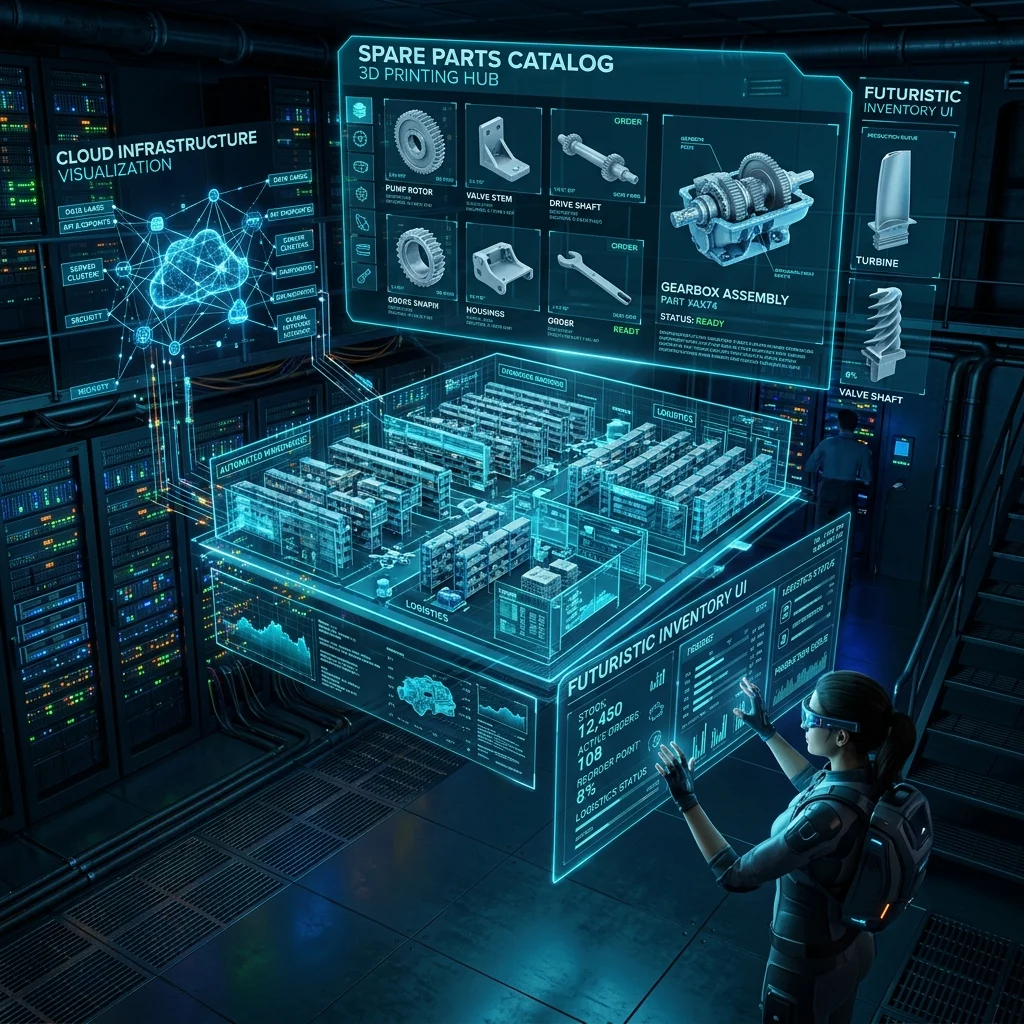
In 2025–2026, Digital Inventory integration with ERP systems is transforming spare parts management. Instead of physical warehouses with thousands of parts “just in case,” companies transition to Digital Warehouses: files instead of shelves, on-demand printing instead of stockpiling.
The Concept: Digital Inventory
| Aspect | Physical Warehouse | Digital Inventory (AM) |
|---|---|---|
| Storage Space | Hundreds of m² | Server/cloud (MB–GB) |
| Inventory Investment | €100K – €10M+ | €0 (files) |
| Minimum Order | MOQ 100–10,000 | 1 unit |
| Delivery | Days–weeks | Hours (local print) |
Interactive Filament Selector
Answer 3 quick questions and find the optimal material for your project.
1. What are the mechanical requirements for the part?
2. What temperature will the part operate at?
3. Are there any specific environmental requirements?
Our recommendation:
PLA filament
Ideal for easy printing, model visualization and decorative parts.
ERP Integration
- Part Screening:AI identifies AM candidates from parts catalog.
- Digital Twin: Each part linked to validated STL/3MF + parameters.
- On-Demand Production: ERP sends file to nearest printer on request.
- Quality Tracking: Serial number, batch, test results documented.
Pros and Cons
Pros:
- Zero Physical Stock: Drastically reduced warehouse costs.
- Instant Availability: Parts “manufactured” in hours.
- Flexibility: Design changes applied instantly.
Cons:
- Not for All Parts: Mass-produced parts still cheaper at > 1000 units.
- Certification: Critical parts require re-certification for AM.
- IP Protection: Digital files vulnerable to theft.
FAQ
Interactive Analyzer for Digital Inventory + Erp Integration: Files Instead Of Shelves
Select a profile to view detailed analysis.
The full picture
This article is one page from The Big Book of 3D Printing: 704 illustrated pages covering every technology, material and fix in one reference.
Read it on Kindle →Engineer, author of The Big Book of 3D Printing and additive manufacturing expert