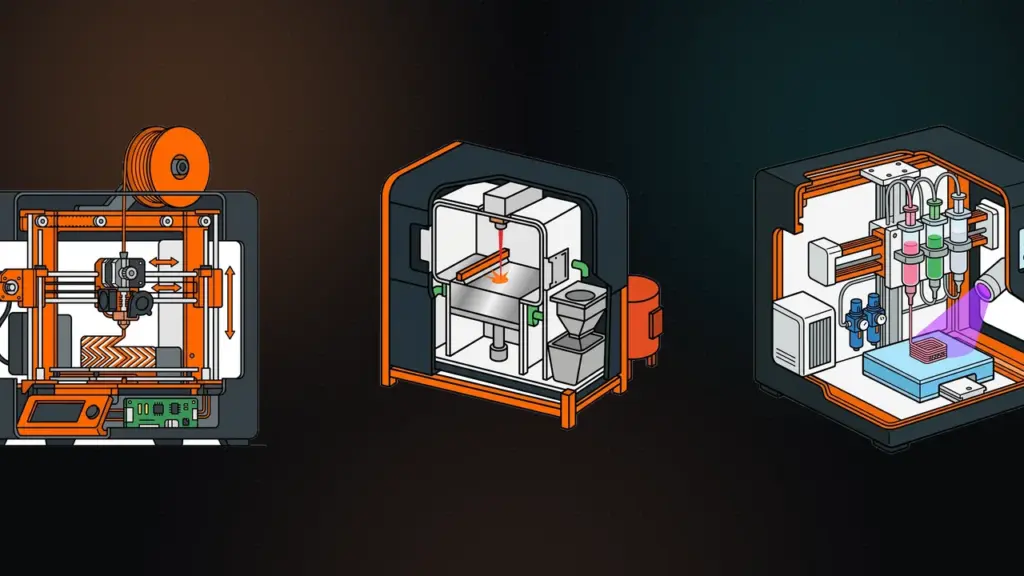
When we hear “3D printing”, we often think of plastic figurines or prototypes. But the real significance of the technology is far bigger: it changes the very rules of manufacturing. For the first time in history, one person with a desktop machine can create what once required a factory, expensive moulds and weeks of waiting. Here are the seven reasons 3D printing matters – for engineers, businesses and society as a whole.
1. Design freedom
In traditional manufacturing, a part’s shape is limited by how we will cut, cast or assemble it. 3D printing removes those limits – you can print internal channels, lattice structures and shapes impossible with a mill or a mould. This opens the door to lighter parts, better cooling and integrated mechanisms in a single piece.
2. Low cost per unit
Injection moulding needs a mould costing thousands, which only pays off at large volumes. With 3D printing the first part costs almost the same as the thousandth – no upfront tooling investment. This makes one-offs, customization and small series economically viable.
3. Speed and fast iterations
This is perhaps the most powerful change. When a design tweak costs hours instead of weeks, teams experiment boldly – print, test, fix and print again. The result: better products that reach the market sooner. More on this in the 3D printing prototyping guide.
4. Local, on-demand production
3D printing lets you produce where the need is, when it is needed. Instead of stocking thousands of spare parts, you keep the digital file and print on demand. This shortens supply chains and reduces dependence on imports.
5. Less waste
Additive manufacturing adds material instead of cutting it away. In milling, much of the blank becomes chips; in 3D printing you use almost only the part’s material (plus supports). Less waste means more sustainable production.
Why now
Machines got cheaper, materials diversified, and software became accessible. What was once industry-only is now in the hands of students, engineers and small companies. The technology has reached the point where it truly changes how we create.
6. Customization at scale
Because every print starts from a file, changing the part costs nothing extra. This makes mass customization possible – bespoke medical implants, prosthetics, individual fixtures – without sacrificing cost or speed.
7. Democratizing manufacturing
Perhaps the most important: 3D printing gives manufacturing power to everyone. You do not need a factory to realize an idea. This is exactly EduFacturing’s mission – to make high-tech manufacturing accessible through knowledge, tools and services.
How to get started
If the topic sparks your interest, start with the basics: what is 3D printing explains how the technology works, and FDM for beginners walks you through the first steps. For a systematic start there is The Big Book of 3D Printing and the Academy. And if you need a finished part today – see our 3D printing services.
3D printing matters because it puts manufacturing back into people’s hands. EduFacturing is the platform that makes it understandable and accessible – explore the whole ecosystem.
The full picture
This article is one page from The Big Book of 3D Printing: 704 illustrated pages covering every technology, material and fix in one reference.
Read it on Kindle →Frequently asked questions
Why is 3D printing cheaper for small production runs?
How does 3D printing reduce waste compared to traditional manufacturing?
What design possibilities does 3D printing make possible that traditional methods cannot?
How does 3D printing make manufacturing more accessible?
Engineer, author of The Big Book of 3D Printing and additive manufacturing expert
Updated on 30 May 2026
This article was written with AI assistance; the facts were checked against the sources on 30 May 2026.