

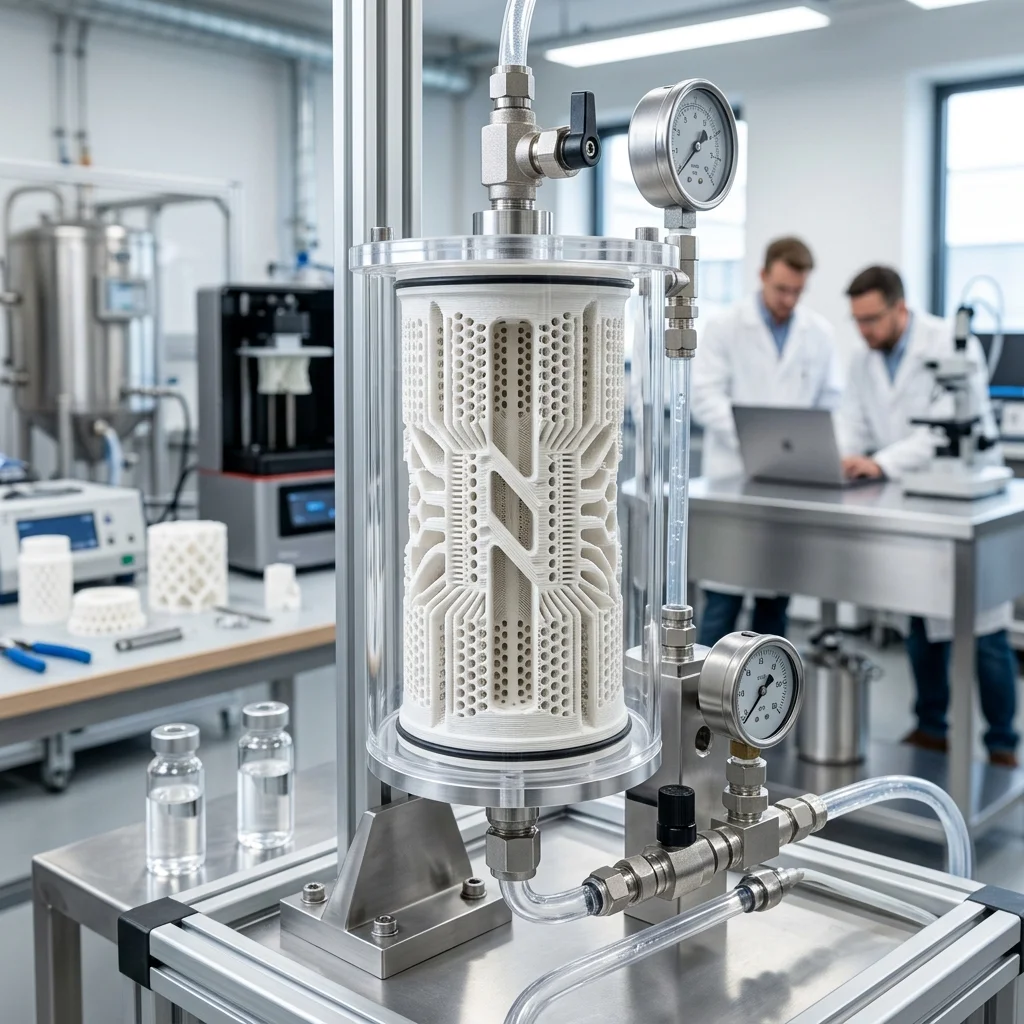
Traditional water filtration has long relied on standardized membranes and subtractive manufacturing limitations. Today, additive manufacturing is rewriting the rules of fluid dynamics and particle separation. 3D printed water filtration components are evolving from experimental prototypes into high-performance, highly customized purification systems capable of addressing some of our most complex water challenges.
By leveraging advanced 3D printing technologies, engineers can now fabricate intricate internal geometries, precisely controlled porosity, and even integrate biological elements into the filters themselves. This transition isn't just about making filters differently: it's about making them vastly superior, more sustainable, and radically adaptable to localized water conditions.
Advanced Additive Manufacturing in Filtration
The core of this revolution lies in the application of specialized 3D printing techniques. Selective Laser Sintering (SLS) is increasingly used to create robust, industrial-grade filtration structures with high chemical and mechanical stability, capable of withstanding harsh effluent environments. Extrusion-based methods, such as Fused Deposition Modeling (FDM) and Direct Ink Writing (DIW), allow for the creation of complex internal geometries like highly optimized feed spacers that reduce membrane fouling and improve fluid flow. Furthermore, multi-material 3D printing is breaking new ground by dispensing distinct materials in a single print job, enabling the creation of "all-in-one" devices with integrated solid housings, hydrophilic and hydrophobic zones, and gradient porous structures.
Breakthrough Innovations: From Ceramics to Living Materials
The capabilities of 3D printing have unlocked unprecedented filter designs. One of the most exciting developments is the creation of Engineered Living Materials (ELMs). Researchers are now 3D printing seaweed-based polymers infused with genetically engineered bacteria. These "living filters" can produce targeted enzymes to neutralize organic pollutants, such as bisphenol A (BPA), antibiotics, and toxic dyes, and are designed to safely self-destruct after their operational lifespan. Another critical innovation is the fabrication of complex ceramic lattices and monoliths. Often infused with active materials like indium oxide, these intricate, high-surface-area structures are proving highly effective at capturing "forever chemicals" (PFAS and PFOA), a growing global health concern. Additionally, advanced AM allows companies to engineer precise, controlled porosity directly into solid components, integrating structural hardware and filtration media.
Customization, Sustainability, and Hyper-Local Solutions
Beyond performance, 3D printing introduces critical systemic benefits to water treatment infrastructure. Additive manufacturing inherently reduces the immense waste, toxic solvents, and high carbon footprint historically associated with conventional membrane production methods like phase inversion. More importantly, 3D printing enables the concept of decentralized, hyper-local water treatment. The ability to print specialized filtration devices on-demand and on-site provides a critical advantage for disaster relief zones, off-grid communities, and isolated industrial sites. Filters can be customized digitally to target the specific heavy metals, microplastics, or contaminants present in a local water source, offering a level of bespoke engineering previously impossible at scale.
Conclusion
While scaling up production and navigating stringent drinking water regulations remain ongoing challenges, the trajectory is clear. 3D printed water filtration components represent a paradigm shift in environmental engineering. By combining complex digital design with advanced materials (and even living organisms) additive manufacturing is building a cleaner, more resilient future for global water security.
The full picture
This article is one page from The Big Book of 3D Printing: 704 illustrated pages covering every technology, material and fix in one reference.
Read it on Kindle →Engineer, author of The Big Book of 3D Printing and additive manufacturing expert