

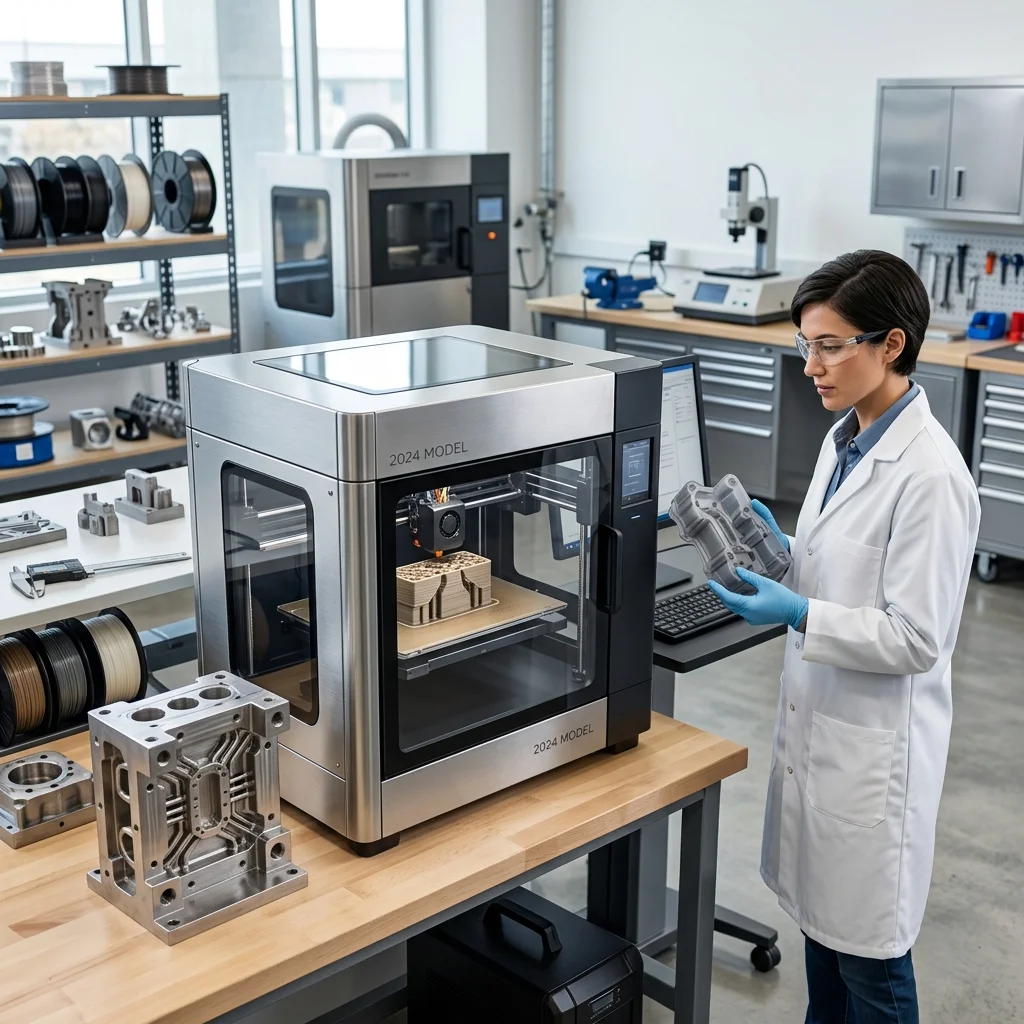
The industrial landscape is transforming faster than ever, and rapid tooling via 3D printing is at the heart of this revolution. While additive manufacturing was historically synonymous with prototyping, in 2024, the technology has firmly established itself on the factory floor in the form of fully functional injection molds, jigs, and fixtures.
With the advent of novel, high-temperature and reinforced materials, coupled with software design automation, manufacturers are no longer constrained by the month-long lead times and exorbitant costs associated with traditional CNC machining. In this article, we will explore the latest technological advancements and how they are changing the rules of the game when it comes to tool creation.
Materials Evolution: From Brittle Resins to Durable Composites
One of the key drivers behind the rise of 3D-printed tooling in 2024 is the monumental leap in materials science. Today, we have access to specialized ceramic-filled resins and high-temperature photopolymers capable of withstanding the immense pressure and heat of the plastic injection molding process. For jigs and fixtures, the industry is increasingly relying on reinforced filaments: such as carbon-fiber or glass-fiber filled nylons. These materials provide incredible structural strength, low weight, and chemical resistance, making them ideal for the harsh environments of the manufacturing floor.
Fast Iterative Tooling (FIT) and Hybrid Manufacturing
The concept of 'Fast Iterative Tooling' (FIT) has completely reshaped the design validation process. Thanks to high-speed LCD and SLA printers, engineers can now print an injection mold in a matter of hours, test real parts made from production-grade materials, and implement design corrections by the very next day. Furthermore, there is a strong trend toward Hybrid Manufacturing: combining 3D-printed mold inserts, which can feature complex geometries like conformal cooling channels, with traditionally milled metal baseplates. This approach optimizes both the speed of fabrication and the overall longevity of the tool.
Design Automation and In-House Production
3D printing software has also undergone a revolution. New design automation platforms allow for the generation of customized jigs and fixtures in minutes, saving dozens of hours of manual CAD labor. This software advancement, combined with the accessibility of mid-range industrial 3D printers, is encouraging companies to bring tooling production in-house. Not only does this slash costs by up to 70-95%, but it also eliminates supply chain risks, enabling true on-demand tool creation.
Real-World Applications: Jigs, Fixtures, and EOAT
The applications of 3D-printed tooling are ubiquitous across modern assembly lines. From ergonomic assembly guides and inspection gauges to complex workholding setups and End-of-Arm Tooling (EOAT) for robotics. Because 3D-printed tools can be perfectly tailored to the geometry of the specific part and topologically optimized for weight reduction, they significantly reduce operator fatigue and minimize strain on robotic arms. The result is heightened productivity, fewer defects, and exceptional manufacturing flexibility.
Conclusion
Rapid tooling via 3D printing is no longer just an alternative; it is a critical strategic advantage. By investing in the 'picks and shovels' of modern manufacturing, companies are unlocking unprecedented speed, agility, and innovation across their entire production workflows.
The full picture
This article is one page from The Big Book of 3D Printing: 704 illustrated pages covering every technology, material and fix in one reference.
Read it on Kindle →Engineer, author of The Big Book of 3D Printing and additive manufacturing expert