

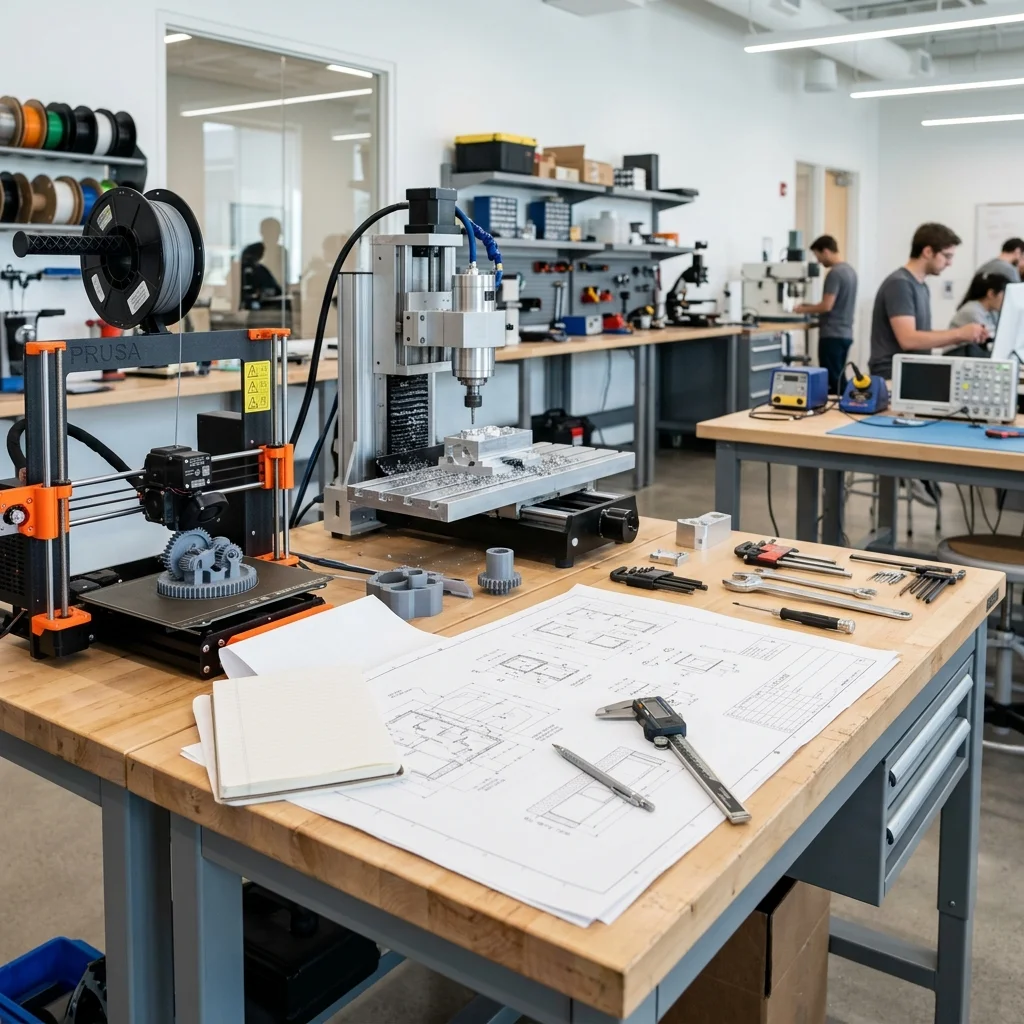
The democratization of manufacturing is no longer a distant vision; it is happening right now in community fabrication labs, makerspaces, and hackerspaces worldwide. Setting up a Fab Lab is a transformative endeavor that bridges the gap between digital concepts and physical reality. However, a successful lab is much more than a room packed with advanced machinery. It is a dynamic ecosystem where technology, education, and community intersect.
At EduFacturing, our core philosophy is simple: we provide the "picks and shovels", the deep knowledge and structured workflows that give hardware its true value. Building a lab requires a strategic approach to equipment selection, spatial architecture, safety, and sustainable economics. This guide serves as your comprehensive blueprint for architecting a space that enables local innovators to make almost anything.
Defining the Core Mission and Ecosystem
Before buying a single 3D printer or CNC router, you must define the mission of your fabrication lab. Are you catering to hardware startups needing rapid prototyping, local students learning STEM skills, or hobbyists exploring digital fabrication? Understanding your primary audience dictates your hardware stack, operating hours, and training programs. A true Fab Lab aligns with the global Fab Charter, emphasizing open access, knowledge sharing, and peer-to-peer learning. It is crucial to view the space not merely as a machine shop, but as an incubator for human potential.
The Hardware Stack: Equipping Your Lab
The foundational equipment of a community lab should enable a wide spectrum of fabrication processes. The standard Fab Lab inventory, as recommended by the Fab Foundation, includes:
– **Additive Manufacturing:** A fleet of FDM 3D printers for rapid iteration, complemented by high-resolution SLA/MSLA resin printers for precision parts.
– **Subtractive Manufacturing:** A large-format CNC router (e.g., 4'x8') for furniture and large molds, alongside a precision desktop CNC mill for cutting PCBs and small mechanical components.
– **Laser Cutting and Engraving:** A CO2 laser cutter is arguably the most utilized tool in any lab, perfect for rapid 2D profiling and press-fit assemblies.
– **Electronics and Prototyping Bench:** Equipped with soldering stations, oscilloscopes, variable power supplies, and microcontrollers (Arduino, ESP32) for IoT projects.
Remember, having the most expensive machines means nothing without the operational knowledge to push them to their limits.
Spatial Architecture and Safety Protocols
A well-architected lab is divided into distinct zones based on workflow, noise, and environmental hazards.
– **Clean Zones:** Dedicated to 3D printing, electronics, CAD workstations, and collaborative meetings.
– **Dirty/Dusty Zones:** Enclosed spaces for CNC routing, sanding, and woodworking, requiring industrial dust collection systems and strict PPE protocols.
– **Hot Zones:** Areas for laser cutting, welding, or soldering, demanding HVAC ventilation, fume extraction, and fire suppression systems.
Electrical infrastructure must be meticulously planned to handle high-amperage equipment. Implement a rigorous, tiered training and certification system for all users to ensure safety and machine longevity.
Sustainable Economics and Operating Models
The graveyard of makerspaces is filled with labs that underestimated operating costs. Your financial model must account for rent, utilities, machine maintenance, tooling (end mills, nozzles), consumables (filament, resin, wood), and insurance.
Diversify your revenue streams to ensure sustainability. Successful models combine tiered membership fees with B2B prototyping services, corporate team-building workshops, and specialized training courses. Partnering with local universities, city councils, and enterprise sponsors can also provide critical grants and equipment subsidies during the bootstrapping phase.
Cultivating a High-Performance Maker Culture
The true heartbeat of your lab is its community. Foster a culture of radical collaboration by hosting regular hackathons, open-source project showcases, and skill-sharing workshops. Implement an "each one teach one" philosophy where experienced members mentor newcomers. Develop a comprehensive onboarding process that not only covers machine safety but also instills a mindset of continuous improvement and respect for the shared space. When you prioritize the community's growth, the lab evolves from a simple workspace into a regional hub for technological innovation.
Conclusion
Launching a community fabrication lab is a bold commitment to localizing production and democratizing engineering. By focusing on the intersection of hardware, rigorous safety, sustainable economics, and a vibrant community, you lay the foundation for a transformative ecosystem. Equip your space wisely, but more importantly, equip your people with the knowledge to create the future.
The full picture
This article is one page from The Big Book of 3D Printing: 704 illustrated pages covering every technology, material and fix in one reference.
Read it on Kindle →Engineer, author of The Big Book of 3D Printing and additive manufacturing expert