

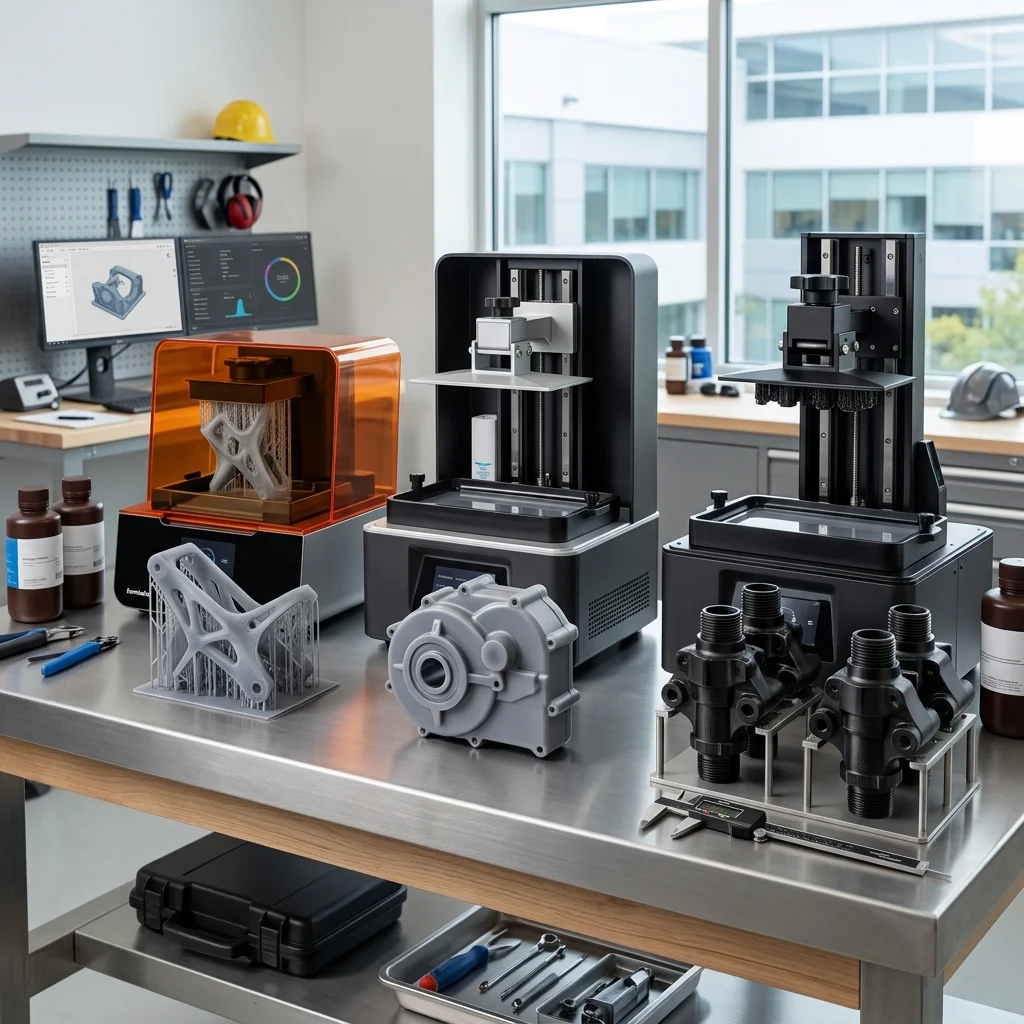
Over the past decade, vat photopolymerization (SLA, DLP, MSLA) has established itself as the gold standard for high-resolution, smooth-surface 3D printing. However, the technology was long hindered by the thermo-mechanical limitations of the materials themselves: namely brittleness, UV degradation, and low heat deflection temperatures. The year 2024 marks a watershed moment in this industry. We are officially transitioning from the era of "rapid prototyping" directly into the realm of "end-use production."
Today, photopolymer resins do not merely emulate injection-molded parts; in many cases, they surpass them. With the advent of clinical-grade biocompatible materials, advanced composite matrices, and groundbreaking recycling solutions, the chemical engineering behind 3D printing is redefining manufacturing capabilities. In this article, we will explore the most significant technological breakthroughs in resin chemistry throughout 2024 and how they are changing the rules of modern manufacturing.
High-Performance Engineering Resins and Composites
One of the most profound achievements in 2024 was the development of high-temperature and ultra-tough engineering resins. New formulations, notably Cyclic Olefin Resins (COR) infused with ceramic or glass nanoparticles, offer exceptional thermal stability. These materials can withstand operating temperatures exceeding 300°C without deformation, making them highly suitable for direct injection molds, advanced tooling, and aerospace components.
Moreover, the notorious brittleness associated with traditional photopolymers has been systematically addressed. By modifying polymer chains at the molecular level and incorporating elastomeric domains into the rigid matrix, chemists have achieved resins that feature high impact strength and superior elongation at break. This effectively eliminates the traditional trade-off between stiffness and toughness.
Sustainability and the Circular Economy: Recyclable and Bio-Based Photopolymers
Historically, thermosetting resins have been notoriously difficult to recycle due to their irreversible cross-linked polymer networks. However, 2024 saw a fundamental breakthrough through the implementation of reversible chemical processes, such as anthracene photodimerization. This innovation allows fully cured resins to be broken down into their base monomers and reused, paving the way for a true circular economy in vat photopolymerization.
Simultaneously, the industry experienced a surge in bio-based formulations. Deriving reactive oligomers from renewable sources, like soybean oil, significantly lowers the carbon footprint. These eco-friendly alternatives eliminate harsh odors and dramatically reduce toxicity during the printing process without compromising the mechanical integrity of the final parts.
Next-Generation Medical Grade and Biocompatibility
The healthcare and dental sectors continue to drive specialized resin innovation. Throughout 2024, numerous FDA and EU MDR-certified Class IIa and Class IIb resins hit the market. These materials are formulated not just for surgical guides, but for long-term intraoral applications such as permanent dental crowns, bridges, and customized orthotics.
Crucially, modern biocompatible resins can withstand repeated autoclave sterilization cycles without losing dimensional accuracy or biomechanical strength. Another significant advancement is the introduction of dual-cure systems enabling dissolvable supports. These supports can be removed in benign solutions, eliminating the labor-intensive mechanical removal process and minimizing the risk of damaging intricate medical components.
Hardware Synergy: 12K Resolution and Multi-Material Ecosystems
Chemical innovations in 2024 evolved in perfect synergy with hardware advancements. The widespread adoption of 12K LCD panels brought pixel sizes down to an astonishing 19 microns. To fully harness this precision, material scientists developed resins with exceptionally low light dispersion and highly optimized photoinitiators that prevent light bleeding into adjacent voxels. The result is unprecedented detail, achieving surface roughness below 10 nanometers for highly specialized applications like two-photon polymerization.
Furthermore, the emergence of multi-material resin printing architectures necessitated the creation of materials with meticulously controlled viscosity and surface tension. This breakthrough allows for the smooth integration of rigid and flexible zones within a single printing process, unlocking the ability to produce complex, fully functional kinematic mechanisms directly from the build plate.
Conclusion
The advancements in photopolymer resins throughout 2024 have proven that material science is the true catalyst driving the industrial revolution in 3D printing. With monumental leaps in thermal resistance, environmental sustainability, and biocompatibility, the applications for resin printing are rapidly expanding beyond the laboratory and into the factory floor. The future of additive manufacturing belongs to materials that are not only strong and precise but intelligent in their lifecycle management. At EduFacturing, we believe that understanding these underlying chemical and mechanical principles is the key to unlocking the full potential of next-generation manufacturing technologies.
The full picture
This article is one page from The Big Book of 3D Printing: 704 illustrated pages covering every technology, material and fix in one reference.
Read it on Kindle →Engineer, author of The Big Book of 3D Printing and additive manufacturing expert