

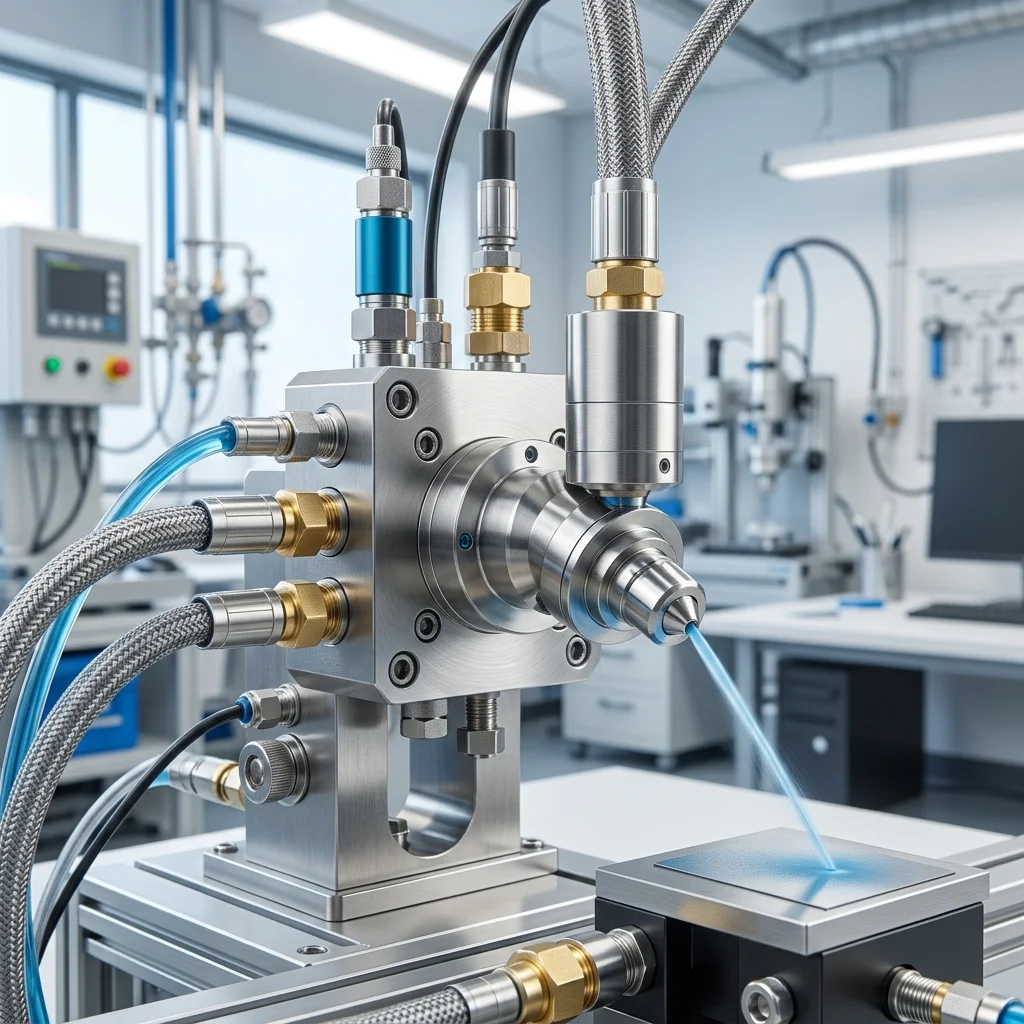
If you’ve spent any time pushing the limits of your 3D printer, you know the sound: the dreaded extruder click. A clogged nozzle is the silent killer of complex, multi-day prints. But while most makers react to clogs with a frantic "cold pull" or a specialized cleaning needle, true mastery of additive manufacturing requires a proactive approach. We need to look beyond the symptoms and address the fluid dynamics, thermal physics, and material science that cause these blockages in the first place. At EduFacturing, we believe in giving you the "picks and shovels": the deep knowledge that makes the hardware work for you, not against you. Let's dive into the advanced engineering strategies that guarantee continuous, reliable extrusion.
Advanced Thermal Management and Heat Creep Prevention
The primary culprit behind mysterious, mid-print clogs is often "heat creep": the unwanted migration of thermal energy up the heat break into the cold zone. When filament melts prematurely, it expands and jams against the PTFE tube or the cold metal walls. To combat this, we must optimize the thermal gradient. Applying a high-quality boron nitride thermal paste to the threads connecting the heat break and the heatsink drastically improves thermal conductivity, ensuring heat is pulled away rapidly. Furthermore, upgrading to a high-static-pressure cooling fan for the heatsink, and ensuring the fan continues running post-print until the hotend drops below 50°C, will eliminate post-print heat soak.
Modifying Surface Energy and Fluid Dynamics
Molten polymers are sticky by nature. When plastic adheres to the exterior or the internal walls of the nozzle, it degrades, carbonizes, and eventually sheds into the extrusion path, causing a hard clog. Advanced operators mitigate this by manipulating the surface energy of the hotend components. Applying a PTFE nanosuspension (often marketed as plastic repellent paint) to the exterior of the nozzle and heater block significantly lowers their surface energy. This prevents stray filament from accumulating. Internally, highly polished all-metal hotends or those with specialized low-friction coatings (like WS2 or DLC) ensure a laminar flow of the polymer melt, reducing the friction and shear stress that lead to material degradation.
Precision Extrusion and Material Conditioning
Even the most advanced hotend will fail if the raw material is compromised. Hygroscopic filaments like Nylon, PETG, and TPU absorb ambient moisture. Inside a 250°C nozzle, this moisture flashes into steam, creating microscopic voids and inconsistent pressure that disrupt the flow and cause buildup. Active filament drying during printing is not just a luxury; it is a necessity for clog prevention. Additionally, your retraction settings play a critical role. Excessive retraction distance pulls the molten polymer too far up into the cold zone, where it rapidly solidifies. Tuning retraction to the absolute minimum required distance, using linear advance or pressure advance algorithms to manage nozzle pressure, keeps the melt zone strictly where it belongs.
Nozzle Metallurgy and Internal Wear
When printing with advanced composite materials (such as carbon fiber, glass, or metal-filled filaments) standard brass nozzles are quickly compromised. The abrasive particles erode the internal geometry of the nozzle. What begins as a smooth 0.4mm orifice becomes a rough, asymmetrical crater. This internal scarring creates micro-pockets where plastic stagnates, burns, and forms clogs. Upgrading to hardened steel, tungsten carbide, or ruby-tipped nozzles preserves the internal geometry and flow dynamics over hundreds of print hours. While these materials have different thermal conductivity profiles (requiring slightly higher print temperatures), their wear resistance is essential for long-term extrusion stability.
Conclusion
Preventing nozzle clogs is not about having the sharpest cleaning needle; it is about engineering an environment where clogs are physically improbable. By mastering thermal management, optimizing the surface energy of your components, maintaining strict material conditioning, and choosing the right metallurgy for the job, you transform your 3D printer from a temperamental machine into a reliable manufacturing tool. Equip yourself with this knowledge, and let’s push the boundaries of what your hardware can achieve.
The full picture
This article is one page from The Big Book of 3D Printing: 704 illustrated pages covering every technology, material and fix in one reference.
Read it on Kindle →Engineer, author of The Big Book of 3D Printing and additive manufacturing expert